
English| EUR
Suggested for you
More currencies
Choose a language
Kuala Lumpur's hawker centres and night markets offer some of Southeast Asia's best-value eating, but prices vary widely between neighbourhood stalls and tourist corridors. This guide breaks down what you'll actually pay for noodles, satay, grilled seafood, and organised food walks, so you can budget accurately and know when you're being overcharged.
Quick answer
Street food dishes at Kuala Lumpur hawker stalls typically cost RM 5 to RM 15, with popular items like char kway teow, nasi lemak, and roti canai at the lower end and grilled seafood or claypot rice towards RM 15-20. Night markets such as Jalan Alor charge RM 10-25 per dish due to tourist foot traffic, while guided food tours range from RM 150 to RM 300 per person and include multiple tastings.
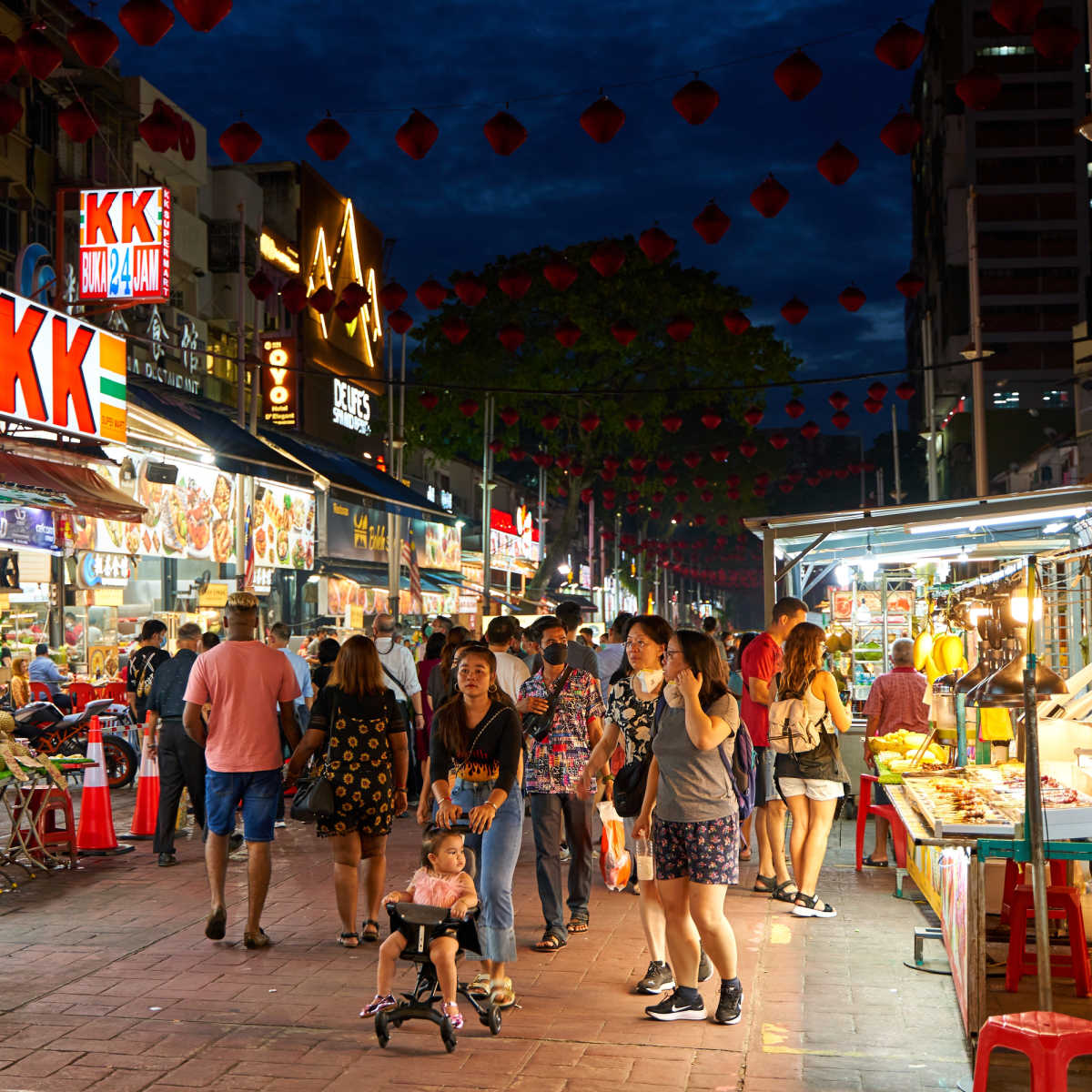
A single plate of char kway teow at a residential kopitiam in Pudu costs RM 6; the same dish on Jalan Alor costs RM 18. That price gap defines the kuala lumpur street food price landscape: location dictates cost more than the food itself. Neighbourhood hawker centres—Madras Lane, Chinatown's Petaling Street day market, the stalls behind Central Market—serve working locals who expect portion and value. Nasi lemak runs RM 5-8, a bowl of curry laksa RM 7-10, four sticks of chicken satay with peanut sauce RM 8. Drinks add RM 2-4: teh tarik, sugarcane juice, air bandung. You'll spend RM 12-20 for a full meal with a drink. Stalls open early—some as early as 06:00 for breakfast crowds—and the best close by mid-afternoon once their prep runs out. No English menus, no air conditioning, no markup. Tourist corridors flip the equation. Jalan Alor, the most photographed hawker street in the city, charges RM 15-25 per dish and RM 8-12 for a large Tiger. Grilled stingray, butter prawns, and sambal clams sit on ice under halogen lights; servers call out in Mandarin, Malay, and English. The atmosphere justifies part of the premium—open-air tables, blazing woks, dense foot traffic from 18:00 until past midnight—but you're paying double what the same kitchen would charge three blocks north. Lot 10 Hutong, the curated basement food court in Bukit Bintang, charges similar rates but consolidates famous stalls under one roof with air conditioning and credit-card terminals. Guided food tours bundle transportation, a local guide, and six to eight tastings across multiple neighbourhoods. Expect RM 150-180 for a three-hour walking tour through Kampung Baru or Brickfields, RM 250-300 for evening circuits that include sit-down meals and a trishaw segment. The cost per bite is higher than eating independently, but the value lies in access: stalls with no English signage, family-run kitchens that don't advertise, and context about ingredients and technique you won't get ordering alone. Tours typically cap at 10-12 people and require advance booking. Understanding the kuala lumpur street food price structure means knowing when convenience or curation is worth the premium, and when a five-minute walk saves you 60 percent with no compromise in quality.
“A plate of char kway teow costs RM 6 in Pudu and RM 18 on Jalan Alor—location dictates cost more than the food itself.”
Street food costs in Kuala Lumpur depend on the specific dish, portion size, and the location of the stall. Visitors pay directly for individual items at each vendor rather than a flat entry fee.
Exploring Kuala Lumpur street food is accessible for all budgets, ranging from low-cost self-guided meals to structured professional tours. Your total expenditure depends on whether you prefer independent exploration or a curated experience with a local guide.
How to spend less
To secure the best value and freshness for street food, the best arrival window is 18:00–22:00. Arriving during this period ensures high ingredient turnover and consistent price transparency as vendors maintain peak operations.
—
Mid-week visits offer shorter wait times and consistent pricing for popular stalls.
—
Peak crowds may lead to slower service but ensure maximum stall variety and freshness.
Hot and humid, 32°C average
Dryer months provide more reliable conditions for outdoor dining.
Humid with rain, 31°C average
Brief afternoon showers usually clear before the evening food rush.
Verdict: The best arrival window is 18:00–22:00, which aligns with daily peak food variety and pricing transparency.
Everything you need to know about kuala lumpur street food price
While a kuala lumpur street food tour often includes multiple tastings and local insights, the overall cost is higher than visiting stalls independently. Guided tours are recommended for those who want a curated experience and expert explanations of local ingredients.
Yes, families can enjoy an affordable kuala lumpur street food price by sharing various small plates. It is a practical way to sample diverse flavors without exceeding a modest budget.
The local currency is the Malaysian Ringgit (MYR), and most vendors in major food hubs prefer cash payments. Ensure you carry small denominations for convenience when purchasing items at these busy stalls.